- Published on
Anvil Robotics Secures $6.5M to Build a Composable "Physical AI" Stack
One tap, and our reporting appears more often in your Google Top Stories. It makes a real difference to a small newsroom.

Supported by RoboStrategySupport for Humanoids Daily comes from RoboStrategy
Sponsored



Investing involves risk, including possible loss of principal. Read the prospectus before investing.
Anvil Robotics, anvil.bot, a startup focused on streamlining the development of "Physical AI," has announced it raised $6.5 million in a funding round led by Matter Venture Partners. The investment, which includes participation from Humba VC, Spacecadet, and Position VC, comes as the robotics industry shifts away from proprietary "black box" systems toward modular, open-source architectures.
Founders Mike and Vijay launched Anvil to address what they describe as a massive infrastructure bottleneck in the robotics space. According to the team, many AI labs currently "burn months" rebuilding basic tooling—ranging from teleoperation systems to inverse kinematics (IK) scripts—before they can even begin training their models. Anvil’s platform aims to provide a coherent ecosystem of hardware, software, and data solutions to eliminate this "rebuild friction."
The Infrastructure Bottleneck
The current state of robotics often forces researchers to act as full-stack engineers, integrating disparate cameras, control systems, and grippers. Anvil argues that while the AI side of the industry is moving at a breakneck pace, the underlying physical infrastructure is moving far too slowly.
"Only the best-funded labs can get it right," the founders noted in an announcement. The Anvil platform is designed to be highly composable, allowing users to disassemble, modify, or fork the company's designs to fit specific tasks. This approach mirrors the "reproducible baseline" philosophy seen in other recent industry moves, such as the Asimov "Here Be Dragons" kit or the ROBOTO ORIGIN project.
The weekly humanoid robotics briefing
One email a week: the launches, funding and research that mattered, with context from Humanoids Daily.
Read recent issuesOpenARM: Research-Grade Hardware for a "Grad Student Budget"
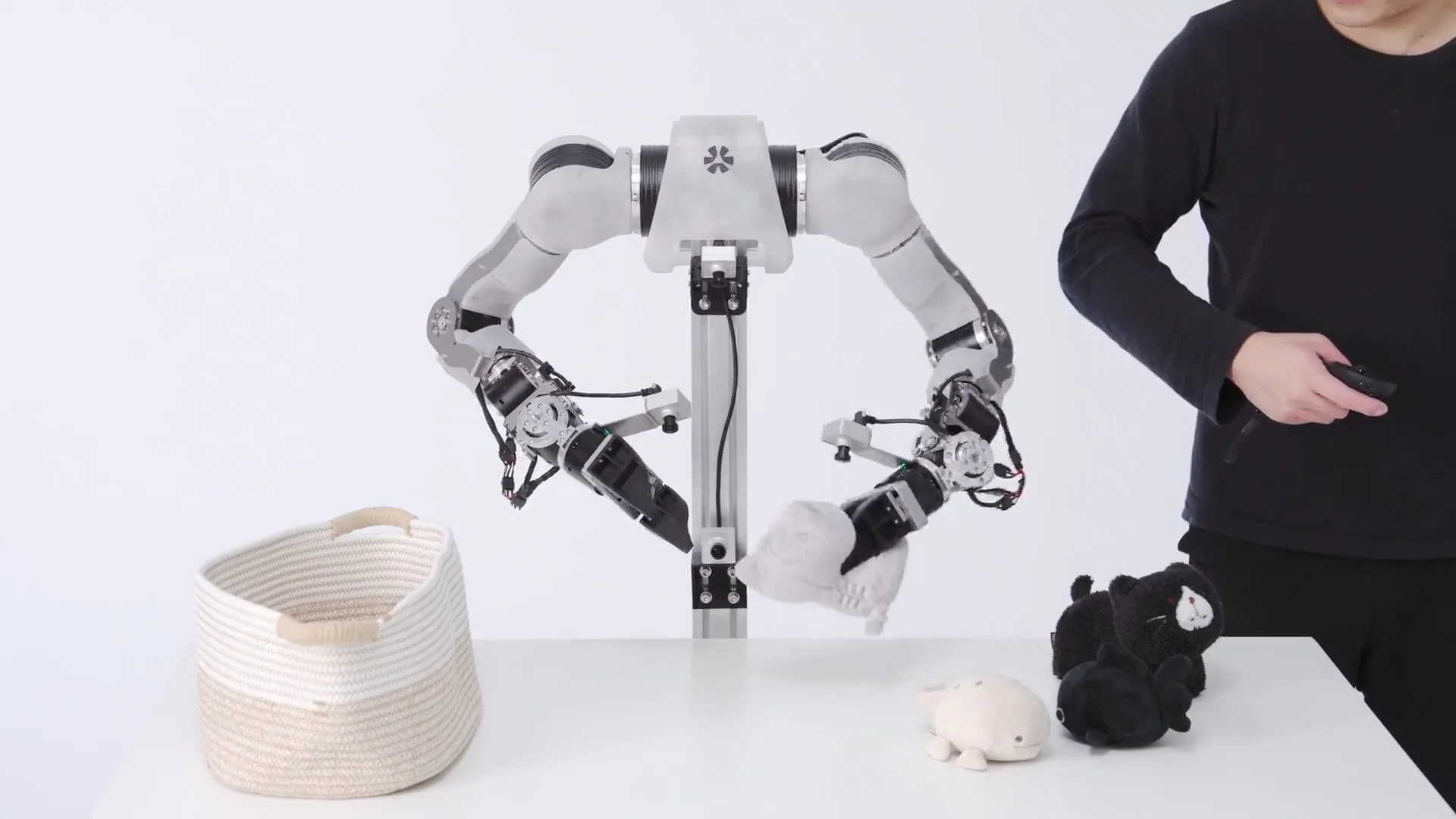
Central to Anvil’s hardware offering is the OpenARM, an open-source bimanual manipulator priced at $5,000. Unlike high-end industrial arms, the OpenARM is constructed using CNC parts and sheet metal—manufacturing methods that are intentionally sturdy and accessible.
The company claims the arm's humanoid form factor creates an "operator affinity" that reduces the learning curve for teleoperation. Anvil’s pricing strategy is notably aggressive:
- OpenARM Unit: $5,000
- Physical Intelligence Setup: Approximately $5.3k
- Lego Disassembly Configuration: Approximately $9.3k
By keeping costs low, Anvil positions itself as a more accessible— though not bipedal —alternative to the $15,000 Asimov kit or the now-defunct K-Bot, which was priced at $8,999 before its creator, K-Scale Labs, shut down due to funding shortfalls.
Avoiding the "Hardware Trap"
The company has already gained notable supporters in the field. Benjamin Bolte, the former CEO of K-Scale who recently joined OpenAI’s hardware division, has publicly stated his intent to continue supporting Anvil's open-source mission.
As Anvil prepares to scale, the core question remains whether a modular, sheet-metal approach can provide the precision required for advanced Physical AI tasks. For now, the company’s mission is clear: to ensure that "anyone on a grad student budget" can begin training physical intelligence models on day one.
Share this article
Read next
- Published on
- Reading time
- 7 min read
AGIBOT Open-Sources GE-Act 2.0, Challenging Unitree in the Open Embodied AI Race
- Published on
- Reading time
- 7 min read
Unitree Begins Open Release of UnifoLM-WLA-1.0 to Tackle Humanoid Generalization
- Published on
- Reading time
- 4 min read
Asimov 1 DIY Humanoid Kits Begin Shipping as Team Details Final Costs
- Published on
- Reading time
- 4 min read
NVIDIA and Hugging Face Standardize Open-Source Robotics Pipeline via LeRobot
- Published on
- Reading time
- 5 min read
BitRobot and Hugging Face Drop HIW-500: A Massive 10TB Real-Home Humanoid Dataset
- Published on
- Reading time
- 4 min read
Hugging Face Drops a $2,500 3D-Printed Humanoid for Open Robot Learning


The weekly humanoid robotics briefing
One email a week: the launches, funding and research that mattered, with context from Humanoids Daily.
Read recent issues