- Published on
1X's Human-in-the-Loop Plan Isn't a Pivot, It's a Decade-Old Bet
One tap, and our reporting appears more often in your Google Top Stories. It makes a real difference to a small newsroom.


Your guide
Rich Robinson
Jee Chee Ren · Executive tour
See China’s AI and robotics ecosystem first-hand.
Six days exploring AI, robotics and advanced manufacturing.
With Rich Robinson, Clinical Professor of Entrepreneurship at Peking University
Beijing · Guangzhou · Shenzhen
29 November–4 December 2026
Referral partnership · We earn a commission on referred bookings.

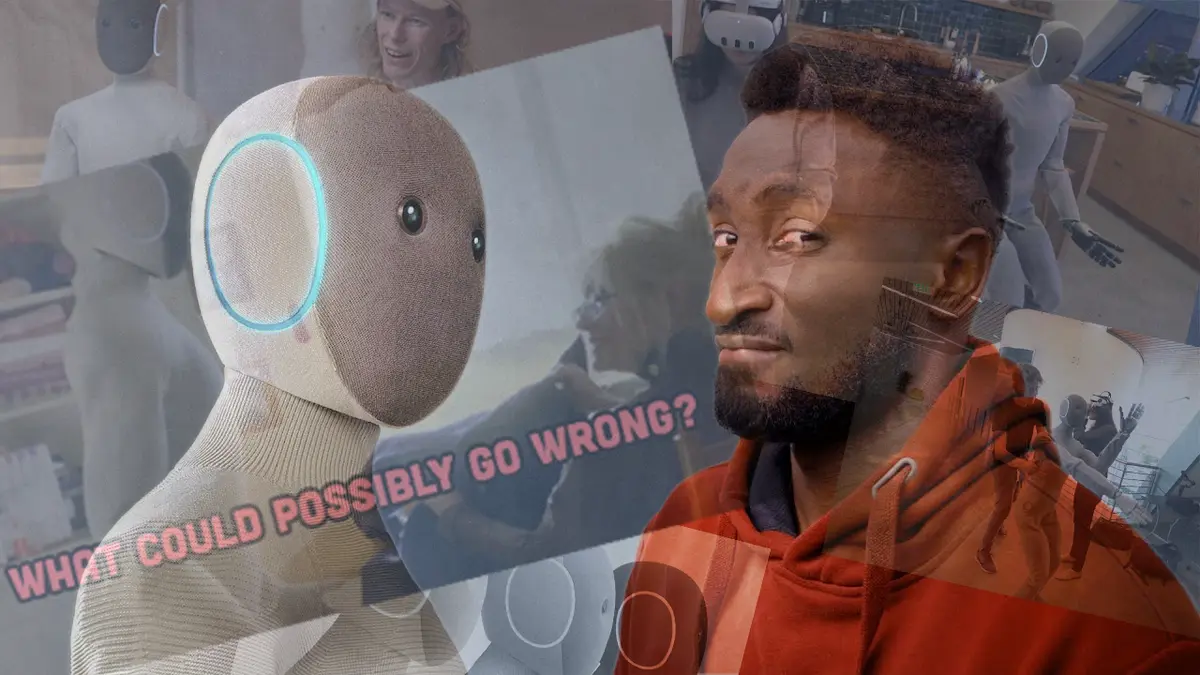
The high-profile pre-order launch for 1X's NEO humanoid has sharply divided the tech community. Critics, including tech reviewer Marques Brownlee and Figure CEO Brett Adcock, have characterized the $20,000 robot as "selling the dream," pointing to the company's "Expert Mode" as evidence that the robot relies on human teleoperation rather than true autonomy.
To skeptics, this human-in-the-loop approach feels like a bait-and-switch. But a review of 1X's decade-long history shows this strategy is neither new nor hidden.
On the contrary, the company's entire hardware and AI philosophy has been deliberately building toward this exact "teleoperation-for-data" model. This isn't a last-minute pivot; it's the core of a high-stakes, long-held bet on how to build safe, intelligent robots.
The Hardware Bet: Safety Enables Learning
1X's strategy begins with a foundational belief held by founder and CEO Bernt Børnich, who has been working on this mission for 10 years. His early inspiration came from robots like Honda's ASIMO, but he was more interested in why it ultimately failed.
The weekly humanoid robotics briefing
One email a week: the launches, funding and research that mattered, with context from Humanoids Daily.
Read recent issuesBørnich's conclusion was that ASIMO, and most of the robotics industry, was built on a "classical robotics regime". This approach uses heavy, high-gear-ratio motors (like harmonic drives) that are powerful but also store enormous amounts of kinetic energy.

This high-energy design, Børnich has argued, makes robots "extremely unsafe" for any "unstructured" environment like a home. A high-energy robot must be caged in a factory or move with extreme caution, as any unplanned "collision" (like touching a piece of furniture) could be catastrophic.
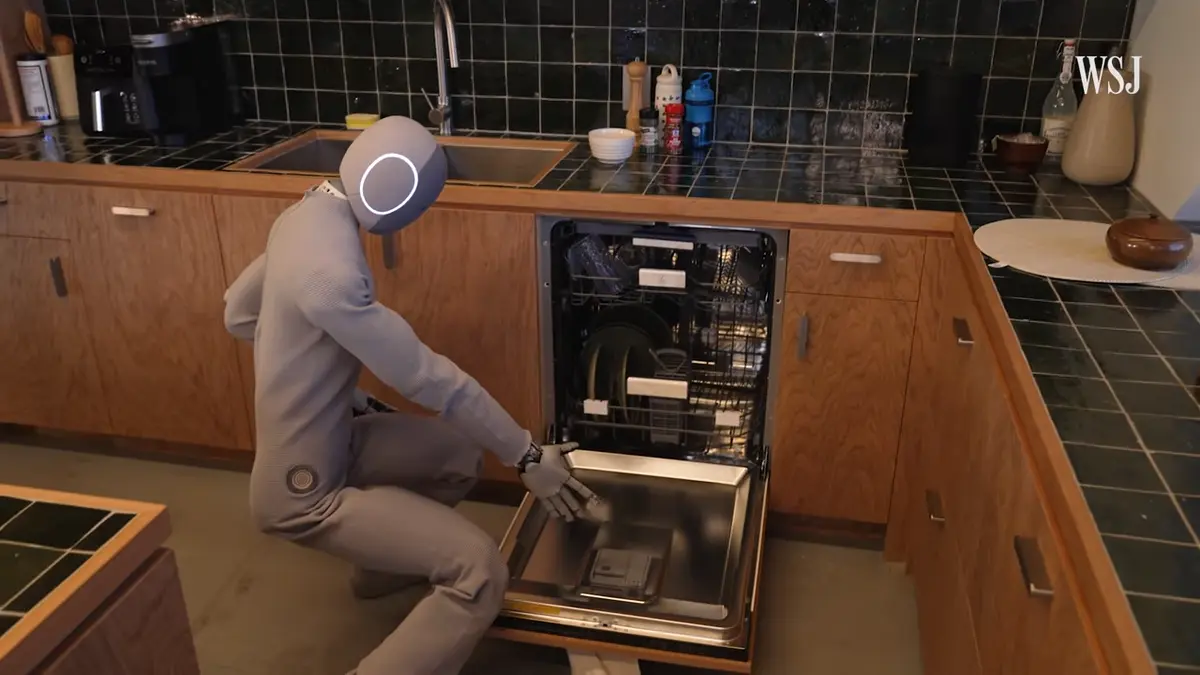
1X's solution, which it has been developing since its inception, was to reject this paradigm. The company focused on building "passively safe", low-energy robots using a "tendon drive system" inspired by human muscles. This "compliant" and "soft" design is intended to interact with the world without breaking it.
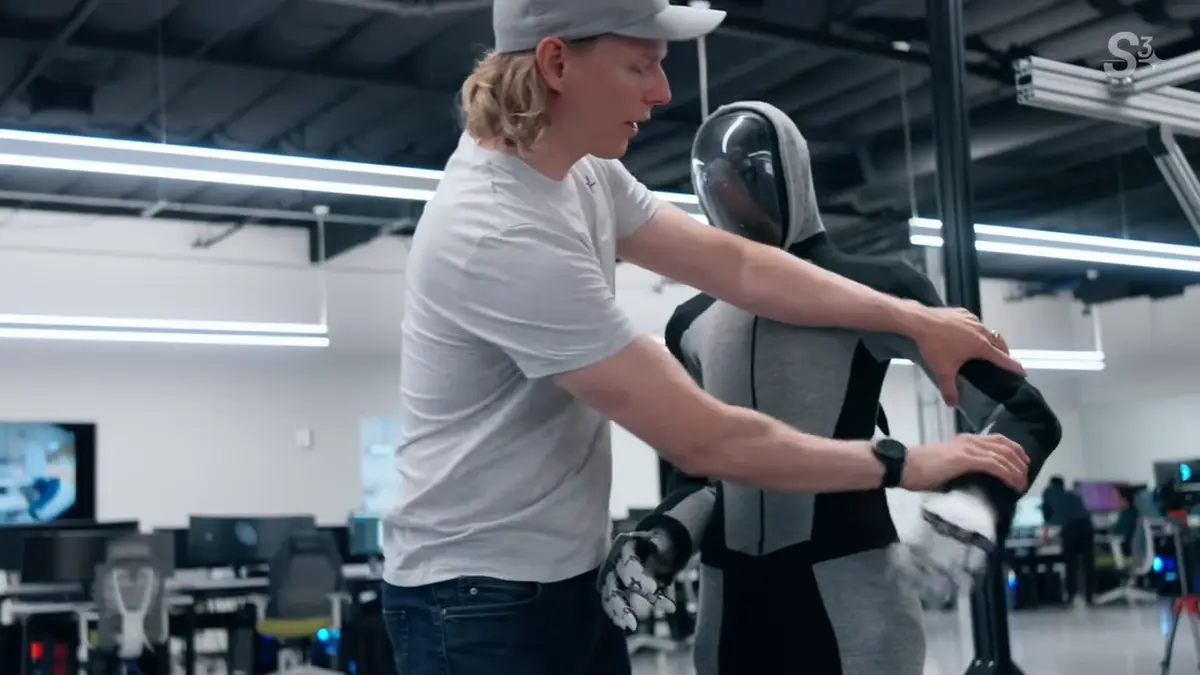
This safety-first hardware is not just a feature; it's the prerequisite for 1X's AI strategy. A robot that can't break itself or its surroundings is a robot that can be allowed to "explore," "learn through trial and error," and ultimately "live and learn among us".
The AI Bet: Data Requires Deployment
With a "safe" hardware platform, 1X's next goal is to make it "smart." For Børnich, true intelligence doesn't come from a lab; it comes from data diversity. And the most diverse data environment on the planet, he argues, is the home.
This creates the industry's central chicken-and-egg problem: a robot can't get smart enough for the home without being in the home, but it can't go into the home until it's smart enough.
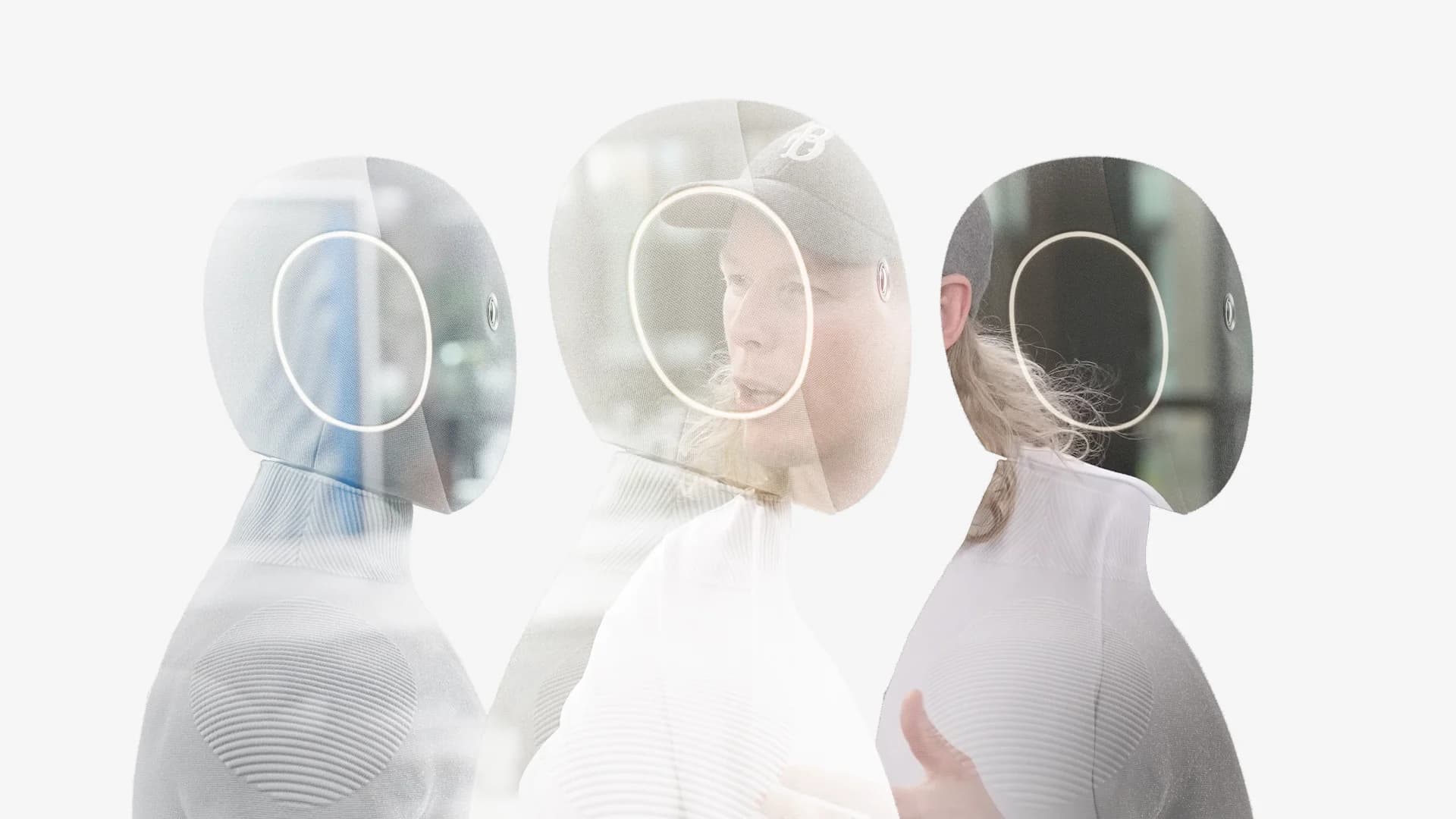
This is where 1X's controversial "Expert Mode" comes in. For years, Børnich has publicly described this "bootstrapping" process. The plan has always been to use human operators in VR to "embody the robot". This teleoperation provides "expert demonstrations" that "transfer knowledge from a human into a machine".
In 1X's model, teleoperation is not a failure of autonomy but the engine to create it.
A Deliberate Gamble, Not a "Scam"
This history reframes the recent NEO launch. The "human-in-the-loop" system isn't an embarrassing secret; it's the very mechanism 1X is selling to its first customers. The company is open about its "social contract" with early adopters, who are knowingly providing the real-world data needed to train the AI.
This data-first strategy has been compared to Tesla's development of Full Self-Driving and is even supported by robotics experts from other organizations.
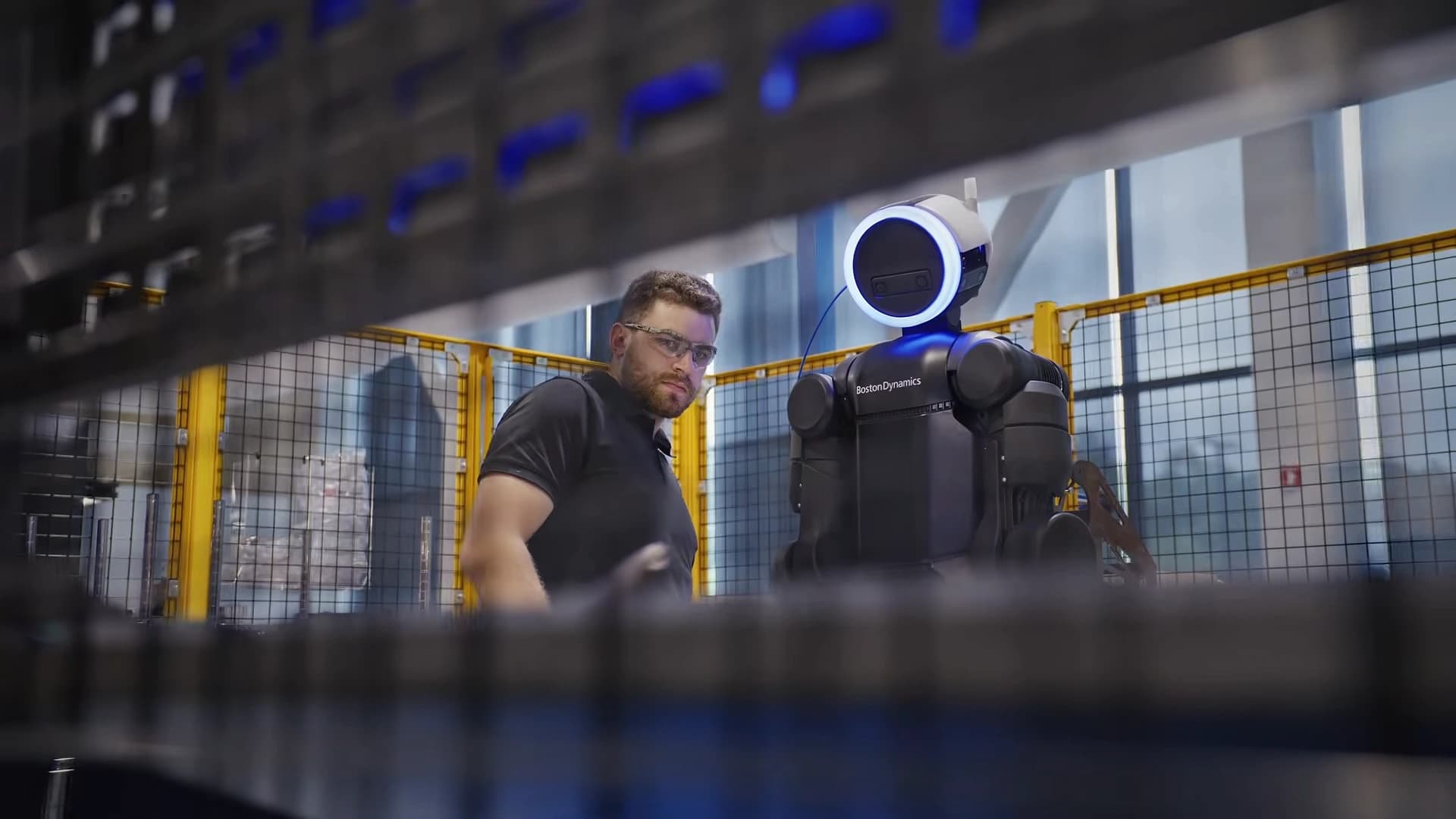
"Everyone seems very hung up on teleop vs autonomy," tweeted Mario Bollini, Atlas product lead at Boston Dynamics. "But for many home tasks, teleop is how you train/build autonomy. ... A big preorder early adopter program is a great way to build a world model."
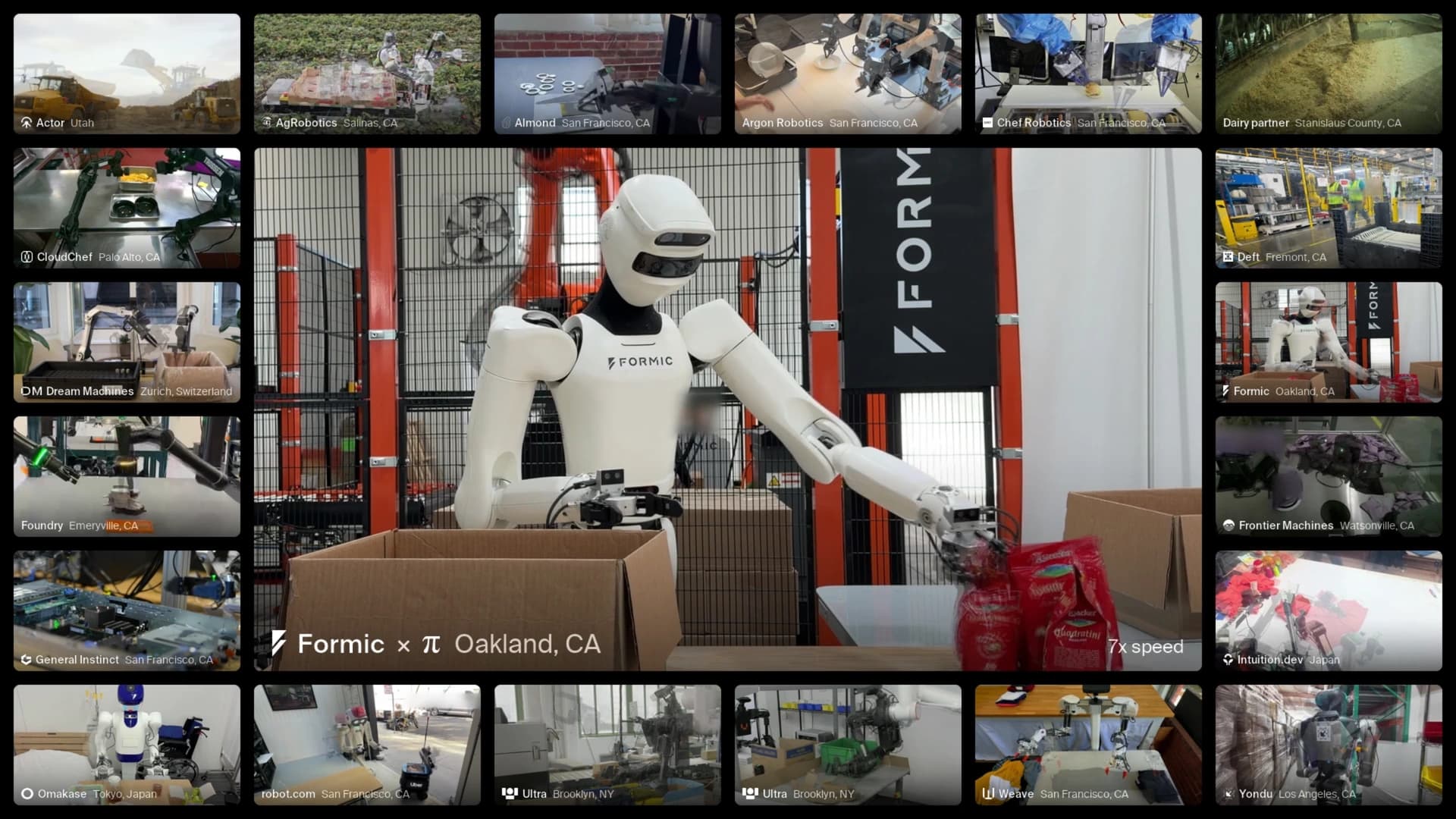
This approach is in direct philosophical opposition to competitors like Figure. Figure is also betting on massive data, but through its "Project Go-Big" initiative, it aims to train its AI on human video to solve autonomy before a teleoperation-free launch. 1X, in contrast, is betting that the most valuable data can only come from the robot itself, using its "Expert Mode" as the very engine to gather that data in the field.
There is no guarantee 1X's strategy will work. But the evidence shows it is not a recent, get-rich-quick scheme. It is a deliberate, consistent, and decade-long gamble on a very specific vision for the future of robotics.
Share this article
Read next
- Published on
- Reading time
- 4 min read
1X's NEO Launch Splits Tech World, Sparking Heated Debate on Autonomy and ''Selling the Dream''
- Published on
- Reading time
- 5 min read
1X Details NEO's 'Human-in-the-Loop' Strategy and Hardware as $20,000 Pre-Orders Go Live
- Published on
- Reading time
- 4 min read
1X Hosts Hands-On NEO Demos for Tech Notables Ahead of "Biggest Announcement"
- Published on
- Reading time
- 4 min read
IShowSpeed's Chaotic Live Stream at 1X Offers an Unfiltered Look at NEO Humanoid Robots
- Published on
- Reading time
- 6 min read
1X CEO Bernt Børnich Predicts "Hard Takeoff" in 3 Years, Details NEO Platform and Data Strategy
- Published on
- Reading time
- 4 min read
One Roof, Four Weeks: Inside 1X’s Vertical Speed Hack as NEO Ramps for 2026 Deliveries


The weekly humanoid robotics briefing
One email a week: the launches, funding and research that mattered, with context from Humanoids Daily.
Read recent issues